Passionate marketer, equestrian, and entrepreneur. As a resident of Connecticut, I stay busy doing the things I love and am always searching to learn and grow. Collaboration is probably my favorite word and through my blogs, I hope to do just that: collaborate with all of you!
As anyone who owns lesson horses knows, it’s a constant struggle, and balancing act, to keeping your horses conditioned and keeping your lesson kids happy. This is an exercise that I used to do with my former trainer and while it sounds simple, my students really started to get a feel for what it’s like to have an adjustable horse simply because we made a game out of it! Continue reading “Gamify Learning to Ride”→
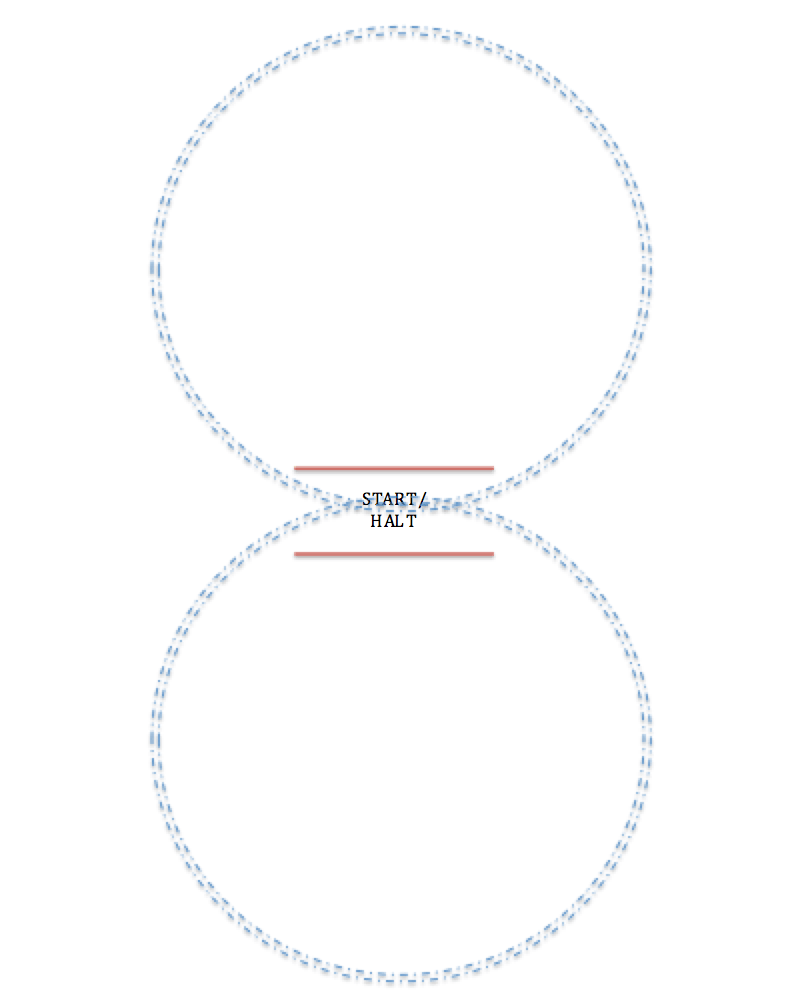
This is a great exercise I picked up from a dressage clinic I took in high school. While I have never been a dressage rider or owned a dressage saddle, I have truly come to realize the value of really great flat-work. Continue reading “Improve Transitions and Lead Changes”→
After a few weeks of teaching riding lessons, I’ve come to truly realize and understand what my trainers went through every day. It’s a constant balancing act between loving your students, wanting them to truly excel, and keeping in mind how far they actually want to progress compared to how much fun they want to have. Continue reading ““You Can’t Make Everyone Happy” – No Longer Applies”→
I’ve recently started traveling to various horse shows and watching trainers give lessons and school their students both in the ring and in the barns. When you decide to teach, you all of a sudden become much more aware of the teaching styles of others, and, how their students receive their instructions. Continue reading “Learning To Ride Just Isn’t Sexy Enough”→
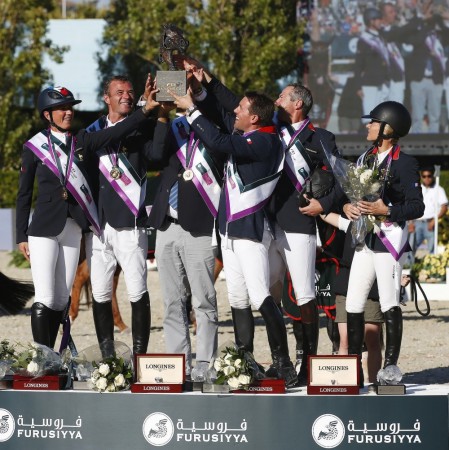
The FEI Tribunal has disqualified Maxime Livio (FRA) and Qalao des Mers from the Eventing competition of the FEI World Equestrian Games™ 2014, following a positive for a Controlled Medication substance. Livio, fifth in the individual rankings, was also a member of the French team, which finished fourth in Normandy to secure qualification for the Rio 2016 Olympic Games. The FEI Tribunal has also disqualified the French team, resulting in the loss of its Olympic qualifying slot.
Samples taken on 29 August 2014 from the horse Qalao des Mers (FEI ID 103MQ19) returned positive for Hydroxyethylpromazine sulfoxide, a metabolite of the sedative Acepromazine. Acepromazine is a Controlled Medication substance on the FEI Prohibited Substances List. Controlled Medications are substances that are regularly used to treat horses but which are not allowed in competition in order to maintain a level playing field.
Any breach of the FEI’s Equine Anti-Doping and Controlled…
My mare has done a lot in her lifetime; mini prix showjumping, dressage, foaling, and now back in the showjumping ring.
While it’s important to keep show horses in a regular workout routine, it’s also important to get them relaxed and out of the ring. Your horse should love their job and you don’t want their sourness to the ring getting in the way of that.
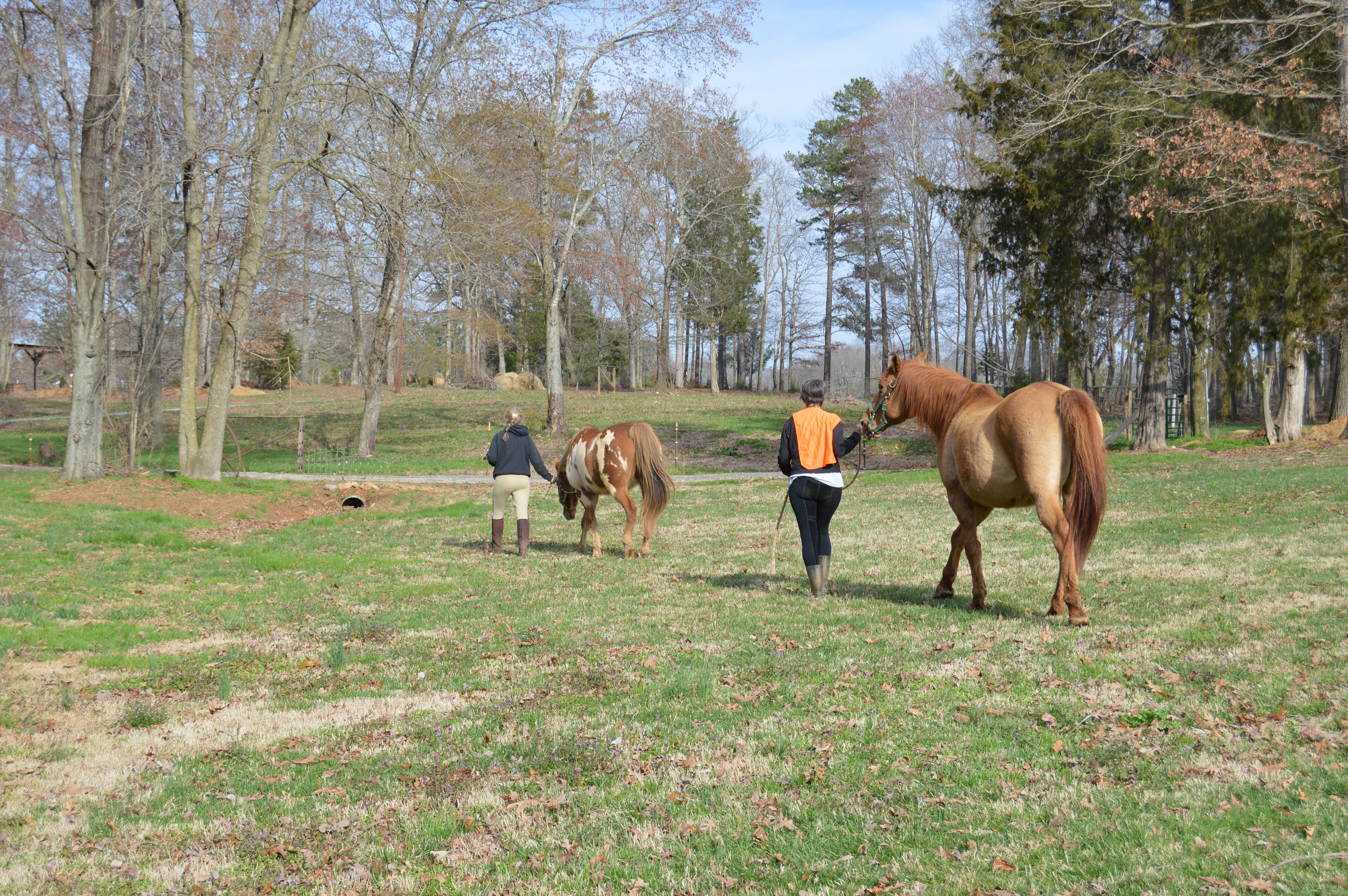
Especially after a hard ride, I love to take Honey out of the ring to stretch her muscles, relax, and get used to being ridden outside the confines of an arena. Plus, it’s a great way to continue to build your relationship with your horse…after all, a horse and rider’s success is based on mutual trust as a team.
Still worried? Think of it this way: if your horse doesn’t get used to being ridden outside of the ring, you can’t blame him/her if they act up while riding them on a show ground.
Always trail ride with a buddy, or at least a cell phone, and always be sure to stay alert and aware of your surroundings. Safety first!
If you’re anything like me then you love to jump. . .and so does your horse. The problem is, when you don’t have a covered arena, the winter season can get you out of shape and out of practice. Not only does your horse need to regain lost strength and stamina but so do you! Not to mention, as the rider you are the “driver”. This is my slow and steady workout to get my mare, Honey, back in show jumping shape.
Week 1: Do It Without the Jumps
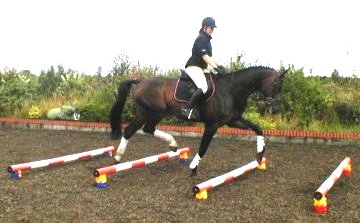
At the start of any conditioning series you really want to get a good feel for where you and your horse are as a team. The first few rides of week one I use to feel my mare out with flatwork. It’s important to have your horse listening to your aid, moving off your leg, balanced, and adjustable on the flat before you think about adding obstacles into the mix. If you have all of these flatwork elements, “checked off”, then you’re good to go with week one! My rides always start with about 10-15 minutes of flatwork focusing on transition as well as lengthening and shortening. Transitions, especially when done correctly ensuring your horse is using their hind ends and not falling forward, are excellent practices to building muscle and increasing responsiveness. After you’ve warmed up with some flatwork, add some trot poles into your workout. These are great for getting your horse to really use their muscles to pick up their feet. If you’re more advanced, raise the trot poles for an added challenge for your horse. Just be careful, I have a hot horse and we have to walk through raised trot poles before attempting to trot them because she thinks that she’s supposed to jump them. Always be listening to your horse and supporting them.
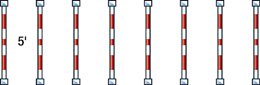
A Guide For Trot Poles – I use one big step
Now, the trot poles are for the horse but the canter poles are for you. Canter poles are great because they’ll help you regain your eye for distances once you start jumping but they’re easy on your horse’s legs. The exercise below will help with your eye but more so help with your seat, your position, and how much you’re supporting and helping to balance your horse. If you’re just working on you eye, I suggest single canter poles or canter pole lines, etc.
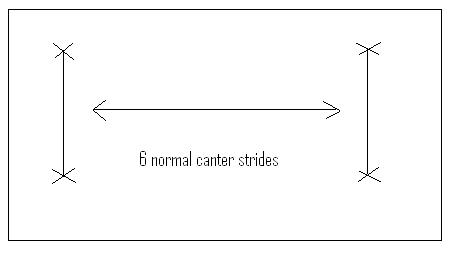
Do this at the canter: Your goal is to have the same number of strides between every pole (This is very challenging when done properly)
Week 2: Hot to Trot
Keep the fences low, either small x-rails or low verticals and keep it simple with single fences. You should still start your workout with good flatwork exercises focusing on elements of balance and adjustment that you feel is needed for you and your horse to improve. I know, I know, we all hate trot jumps but they’re actually super helpful for two reasons:
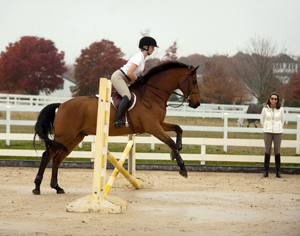
They’re great for building muscle in your horse’s hind end because they force your horse to rock back and use their haunches to jump. Remember not to let them rush the trot jumps so this can happen!
They force us, the rider, to really keep our upper body back and let the horse jump up to us instead of us jumping ahead of the horse.
Week 3: Exercises
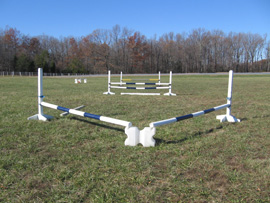
This is the time to think about all the courses you’ve jumped in the past and dissect them element by element. Keep the fences at a low height (but slightly higher than your trot jumps) and practice the course elements you set up. For me, I make sure to set up long straight lines, rollbacks, long approaches to single fences, skinnies on the short end of the arena, bending or broken lines, and even some fences set up on a serpentine. While you can’t do all of these at once you can do at least half of them and only have to set up four (4) jumps in the ring so don’t get overwhelmed. Remember, the idea here is to keep the fences low and work on the technique and execution of riding each element individually. We’re NOT putting them into a full course just yet but rather practicing so that when we do, both rider and horse are confident and ready to ride.
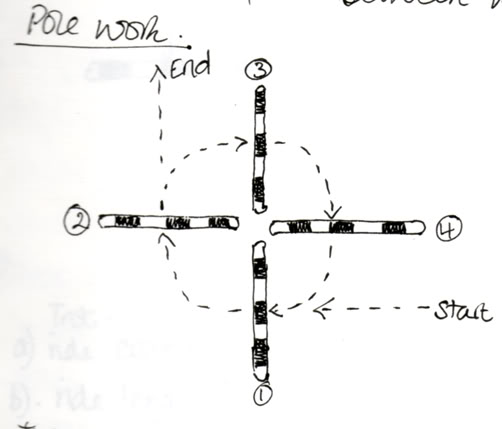
One example of an exercise that will work on bending lines in both directions depending on what route you take.
*Note: I never jump every day of the week. Even when practicing exercises over low fences, I’ll only do three (3) days a week of jump work with one (1) day off and three (3) days of complementary flat work.
Week 4: Set the Course
Now it’s time to put all the exercises we worked on in week three into a full course. My suggestion for you is to have the jumps set so you can ride a more simple, hunter-like, course for your first course and if all goes well, add some equitation-like elements to make it more challenging. It depends on your horse, so be sure to be listening to them, but I usually raise the jumps to a low schooling height for our full course with some trot jumps as my warm-up. For example, my mare and I show at 3’6″-3’9″ so our height for this week in our training will be 3′-3″ if she feels good over the 3′-fences. I always jump a few single fences at this height before asking her to do a full course to get a feel for how she’s jumping. Also make note of your horse’s breathing and give them plenty of breaks to stretch out and walk if they’re sounding like a freight train. Pushing them is good to an extent but I always ere on the side of caution if my mare is telling me she’s had enough.
After week four I play it by ear but if you’re curious, this is what my horse’s weekly workout schedule looks like:
I recently was lucky enough to make my way down to the Winter Equestrian Festival in Wellington, FL and watch the jumper derby that was being held two weeks ago.
Now, I’m not calling myself an expert but there are a few things that just make sense:
A horse cannot be looking at the ground if it is expected to jump a 5′ fence
In Man vs. Horse tug-of-war, the horse wins…every time
While many riders had wonderful rounds it amazed me that at this level of competition, these mistakes were being made. There have only been two times in my life where I have wished that the horse would throw its rider and get the heck out of there.
First, was when a “trainer” (no clue who) couldn’t handle a horse she was showing and decided to jump a 3′ course in draw-reins. Second, was at this jumper derby when the rider literally pulled the horse’s teeth out and then spurred it over the fences. The first time, the trainer did get thrown and the horse did get the heck out of the ring before politely waiting by the schooling area for someone to catch him. This jumper was forgiving (I guess) and instead of throwing his rider, he simply refused to jump.
I find it so helpful to watch people ride at upper-levels because every mistake made is amplified and by watching others, you can better analyze and improve your own riding. How does that quote go?
If you do not learn from history, you’re bound to repeat it.
Well, learn from the riding mistakes of others so you don’t find yourself approaching a 4’9″ fence and feel your horse slide to a halt because your constant seesawing on his/her face is not helping anyone. I know I’ve kept that thought in the back of my mind for every course I’ve ridden & the times a compromise with my mare are the times we go double clear.












 Equestrian Digest